Shadows on the City Sidewalks

A MEDITATION ON URBAN ART-BY-SUNLIGHT

Occasionally, when not looking at interesting architecture on city walks  — college classes taught me to look above ground level — or admiring the clouds, I like to look down in search of urban art underfoot. To take time, sometimes, studying what the sun is doing. The sun is often busy making art. Renaissance. Abstract. Art Deco. With the help of street trees, leafy designs splash across sidewalks and stretch upward to green shrubbery. The result is an invitation to slow down, wonder and appreciate.

The opening invitation might come in the form of a mixed-media design, such as this assemblage of line, texture, color and imagery — despite the green being only overhead and out of the frame. Random chalk-mark additions are not infrequent. Including advice messages:

When meditating on urban art, one has to practice dismissal of interruptions along the way.

But back to the sunlight and shadow. The light plays on sidewalk shrubbery, creating green-leaf foreground for an artwork of patterned shadow background. In hindsight, the work could have done without the intrusion of that cellphone image at the bottom edge, but we try not to overthink things. 

Even when confronted with the challenge of downtown business districts the sun often finds a way. These are the times when walking meditation goes in different directions: skyscraper dreams. Are any of my fellow humans noticing the sidewalk shadow-painting at their feet? Can the introduction of steel and concrete have something artistic to say for itself? Urban architects hope so. 

Welcome to Urban Art Appreciation 101. We’re all in this together. 


Nighttime in the Lonely City: A photo essay

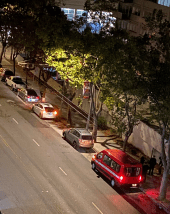
(All photos by the author, from her 7th floor balcony across the street)

A city dweller is alarmed by the terrible sounds drifting into her window. Dark, guttural cries. No words, just frightened, frightening cries. They seem to be coming from below ground, probably the stairs that go from the sidewalk to an entry into the garage of the building across the street, below her seventh-floor balcony.

Finally, the watcher calls 311. 311 is unquestionably the best thing the City of San Francisco has going for it. An actual, real person answers your call, and sends it to the appropriate other real person. “Someone’s in distress,” says the caller, watching (and holding the phone out) from the balcony window. “It’s been going on for some time and I’m worried about him.” Within minutes a red van and a white car quietly approach.

Four men get out of the van. They begin talking in soft voices to the stranger in distress. The watcher only picks up occasional words, but it’s clear they are trying to talk him into coming up. He’s no longer shouting.

Eventually, a forlorn figure emerges from below. The would-be rescuers gather around him, keeping far enough away that he won’t be frightened further. For 10 or 15 minutes they plead with him to let them take him somewhere for shelter, perhaps medical attention. He is having none of it.

Finally the figure shuffles off into the darkness, into the streets of the city which are, the watcher suspects, his only familiar. The red van and the white car drive away. The watcher goes back inside her warm apartment, feeling grateful for her city’s resources, but sorrowful for humankind.